

Your bedroom does far more than give you a place to sleep. The way it is physically designed can directly alter the physiological quality of your nightly rest.
Roughly 60 million people experience chronic insomnia each year, yet many do not realize their bedroom’s layout might be fuelling the problem. In fact, a properly arranged bedroom layout can reduce overnight sleep disturbances by up to 60% compared to poorly configured spaces. 

The solution? It starts with understanding your specific sleep style.
Whether you are a hot sleeper, a light sleeper, or a confirmed night owl, your bedroom interior design should work in harmony with your natural rhythms — not against them. A space tailored to your unique biology will always outperform a room that simply looks good on a screen. This guide walks you through building a bedroom layout completely optimized around you.
Understanding Your Sleep Style
No two people sleep in the same way. Your body has biological preferences that influence when you sleep best, how you regulate temperature, and how easily environmental changes wake you.
1. Chronotypes and Your Internal Clock
Your sleep style is rooted in your chronotype — your genetically influenced inclination to sleep at specific times. Your circadian rhythm (the internal 24-hour clock running in the background) coordinates body temperature, metabolic speed, and melatonin release.
Fascinatingly, individual circadian clocks rarely run on a perfect 24-hour loop. Some people possess internal cycles measuring closer to 23.5 hours (natural early birds), while others run on a 24.5-hour cycle (the classic night owls). This tiny half-hour variance explains why some struggle to function before 10:00 AM while others bounce out of bed at dawn.
2. Hot vs. Cold Sleepers
As you fall asleep, your core body temperature must naturally drop by 1 to 2 degrees Celsius to initiate a deep sleep state. However, your body’s ability to shed or retain that heat varies drastically.
- Hot Sleepers: Often possess a faster metabolism or greater muscle mass, which acts as a continuous internal heat generator. They frequently wake up sweating, flip their pillows to find the cool side, or sleep with one foot outside the duvet.
- Cold Sleepers: Often have lower muscle insulation or slower circulation, leaving their hands and feet cold even when their core temperature is safe. They typically bundle under multiple heavy layers and curl tightly to trap air.
The Compatibility Gap
Sleep professionals recommend keeping an optimal bedroom temperature between 16–18°C (60–65°F). Temperature-incompatible couples experience 43% more overnight sleep disruptions than those with matching thermal preferences.
3. Light vs. Deep Sleepers
How easily you wake comes down to sleep spindles — unique burst patterns of brain wave activity that occur during non-REM sleep. Individuals who naturally produce a higher volume of sleep spindles are significantly better at filtering out environmental noises in the brain, allowing them to sleep through sounds that would instantly rouse a light sleeper.
4 Environmental Pillars of Restful Spaces
To support these biological needs, your room layout must address four distinct environmental design pillars:
- Lighting & Darkness: Light halts melatonin production instantly. Even small ambient glows from alarm clocks or streetlights passing through thin curtains reduce slow-wave deep sleep.
- Acoustic Seal: Sound easily transfers through shared walls, doors, and window casings. Because sound travels wherever air flows, sealing physical structural gaps is vital for protecting light sleepers.
- Air Flow & Quality: Overnight, closed bedrooms allow $CO_2$ and airborne volatile organic compounds (VOCs) to accumulate. Dropping these levels via proper air circulation prevents fragmented, restless sleep.
- Colour Temperature: Shorter-wavelength colours like blues and soft greens naturally promote psychological relaxation, reducing your resting heart rate and blood pressure before sleep.
Tailoring Your Bedroom to Your Biology
Simple Bedroom Design for Hot Sleepers
Hot sleepers need an environment designed for passive cooling and rapid heat dissipation.
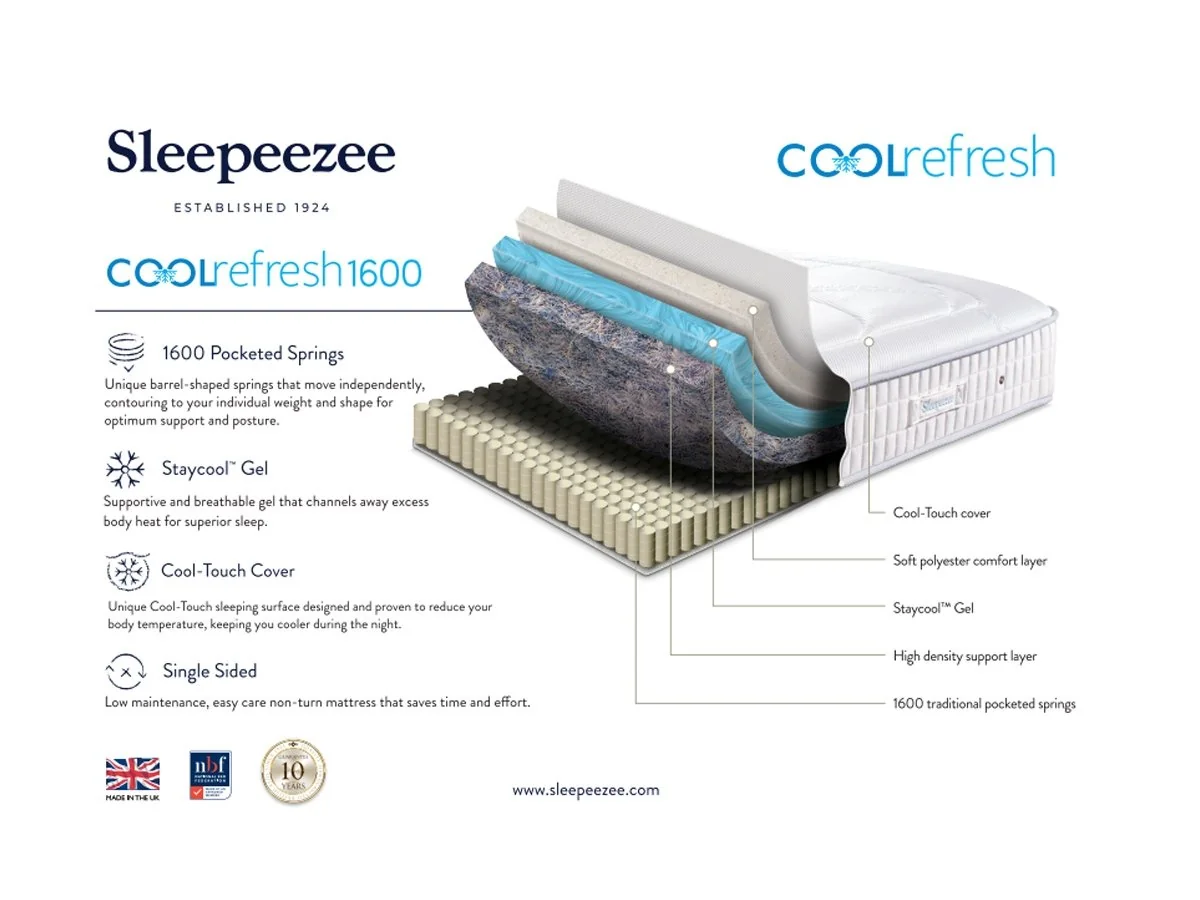
- Mattress Architecture: Traditional memory foams trap heat close to the skin. Instead, hot sleepers should lean toward pocket-sprung systems or open-cell Gel Mattresses that pull heat away from the body.
- Textile Selection: Swap out synthetic polyesters for breathable duvet covers made of stone-washed linen, Tencel, or low-thread-count cotton percale, which allow air to travel freely.
- Cooling Elements: Introduce large leafy house plants (like rubber plants or peace lilies), which release microscopic moisture through their leaves to gently cool the surrounding air during warm nights.

Design Solutions for Cold Sleepers
Cold sleepers require a space structured to insulate, trap warmth, and remove drafts.
- The Warmth Palette: Decorate with rich, soft colours like peach, terracotta, creamy neutrals, or warm sage. These tones visually compress a room, making it feel distinctly cozier.
- Layered Textures: Ground the bed frame with a heavy, thick pile wool rug to block cold rising from the floorboards. Layer the mattress with a high-tog duvet (10.5 to 13.5 tog) and heavy velvet or chunky-knit throws.
- Lighting Warmth: Choose warm white LED bulbs (2700K to 3000K) for your bedside table lamps to avoid the chilly, sterile feel created by cooler daylight bulbs.
Creating the Ideal Space for Light Sleepers
Because light sleepers account for roughly 51% of the population, maximizing environmental control is crucial.
1.Seal the Window Lines: Phase 1.
Install heavy blackout blinds featuring side tracks that clip directly to the inner window frame. This seals off the perimeter light leaks that creep around standard curtains.
2.Eliminate Acoustic Gaps: Phase 2.
Apply weatherstripping or acoustic sealant around your bedroom door frame and windows. Because sound travels directly along airflow paths, sealing these air gaps drastically drops decibel intrusion.
3.Clear the Eyeline Storage: Phase 3.
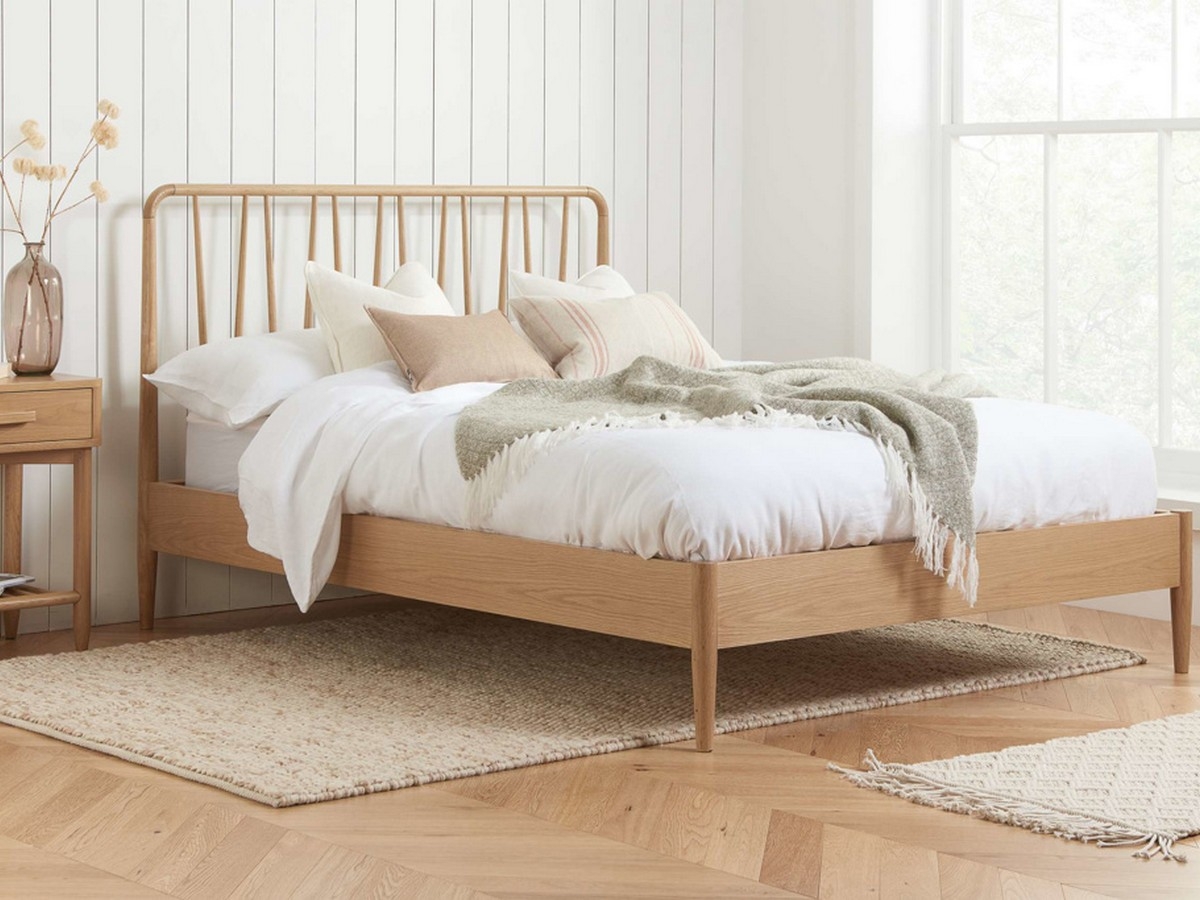
Clutter keeps the brain processing data when it should be resting. Choose Ottoman Beds or bed frames with integrated storage drawers to hide seasonal clothing and items completely out of your direct line of sight.
Furniture Placement for Structural Calm
How you position your furniture builds the physical foundation of your nightly rest.
- The Bed Anchor: Place your headboard firmly against your longest solid wall, facing toward the open room. Avoid placing the headboard directly beneath a window, which exposes you to shifting air drafts and fluctuating morning light.
- Nightstand Proportions: Position your nightstands so they sit level with, or up to 2–4 inches above, the top surface of your mattress. Leave a clear 3 to 6-inch gap between the side of the bed frame and the nightstand to ensure you can reach items smoothly without stretching your back.
- Clutter-Free Nightstands: Choose nightstands that feature closed drawers or storage cabinets rather than open shelves. Keeping the surface clear of wires and loose objects reduces mental stimulation right before you switch off the lights.
Small Changes, Smarter Sleep
Restful sleep is highly personal, and your bedroom should reflect your specific biological needs. You don’t need a total architectural remodel to feel a difference in your energy levels.
Pick one or two adjustments tailored specifically to your sleep style tonight — whether that means swapping out a synthetic duvet cover for breathable linen, adding an insulating rug, or clearing off your nightstand surfaces. Designing around your biology is the fastest way to turn a standard bedroom into a true health sanctuary.